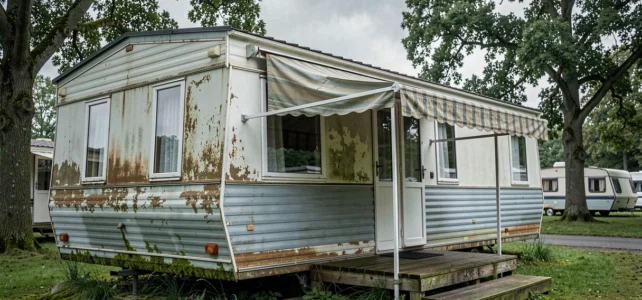
You own a mobile home installed in a Belgian campsite for over twenty years, and you are wondering what the law still allows you to do with it. This question is particularly relevant in Belgium, where the legal framework combines federal, regional, and municipal competencies, each with its own rules. Understanding these legal implications before receiving a letter from the campsite operator can prevent many unpleasant surprises.
Tension between federal law and the Walloon Tourism Code for old mobile homes
The first trap, which most owners discover too late, lies in a conflict between two levels of government. On one hand, Belgian federal legislation allows for residency in a mobile home located in a campsite when it is the actual residence of the person. On the other hand, the Walloon Tourism Code prohibits permanent habitation in tourist campsites.
In practical terms, a municipality can register you in the population register at the address of your mobile home if you actually live there. The campsite operator, however, can invoke regional regulations to refuse this permanent occupation. This contradiction is not theoretical: it affects hundreds of residents in Wallonia, often settled for decades.
When a mobile home exceeds twenty years, this tension worsens. The operator has an additional argument (presumed obsolescence) to request the removal of the unit, even though the resident is officially registered there. The implications of the law on mobile homes over 20 years old therefore vary depending on whether you are an occasional tourist or a permanent resident, and according to the region where the campsite is located.
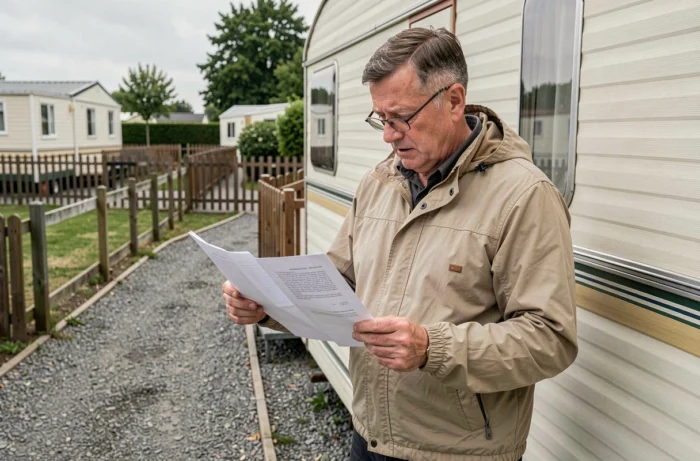
Caravaning permit and CGT authorization in Wallonia
Why is the caravaning permit so crucial for an aging mobile home? Because it sets the operating conditions for the land, and thus what can remain there or not.
In Wallonia, any land hosting mobile homes for tourist purposes must have either a caravaning permit or an authorization issued by the General Tourism Commissioner (CGT), in accordance with articles D 202 and following of the Walloon Tourism Code. This authorization can, in some cases, exempt from urban planning permits. It never exempts from safety, sanitation, and environmental protection obligations.
For a mobile home over twenty years old, this means that the operator may be compelled by the CGT to remove units that no longer meet current standards. This is not an arbitrary decision by the operator alone: it is an administrative requirement linked to the maintenance of the campsite’s authorization.
What the CGT authorization concretely imposes
- The mobile home must retain its means of mobility (wheels, chassis) to be classified as a mobile leisure residence and not as a fixed structure subject to an urban planning permit.
- The connections (water, electricity, sanitation) must comply with regional environmental standards, which can be problematic for installations over two decades old.
- The land footprint and density of land use are regulated: an old mobile home that has been enlarged with fixed terraces or annexes may exceed the allowed thresholds.
Rental contract for the pitch and clauses on the age of the mobile home
The Belgian legal framework does not set a national age limit beyond which a mobile home should be destroyed or removed. No Belgian law imposes automatic removal at twenty years. What triggers removal is most often a clause in the rental contract signed with the campsite operator.
These private contracts frequently contain a clause regarding the maximum duration of operation of the mobile home, often set between fifteen and twenty-five years. Upon expiration, the operator may require replacement with a newer model or the departure of the owner.
Identifying abusive clauses
Not all contractual clauses are necessarily valid. Under Belgian law, a clause that creates a manifest imbalance between the rights of the parties can be contested. For example, requiring an owner to purchase a new mobile home from a dealer imposed by the operator raises questions.
Before signing or renewing a pitch contract, check these points:
- Is the maximum duration clause clearly formulated, with a specific date or an objective criterion (technical condition, compliance with standards)?
- Does the contract provide for compensation or a reasonable period for the removal of the mobile home at the end of the contract?
- Does the operator impose the purchase of a new model from a specific supplier, which could constitute a questionable business practice?
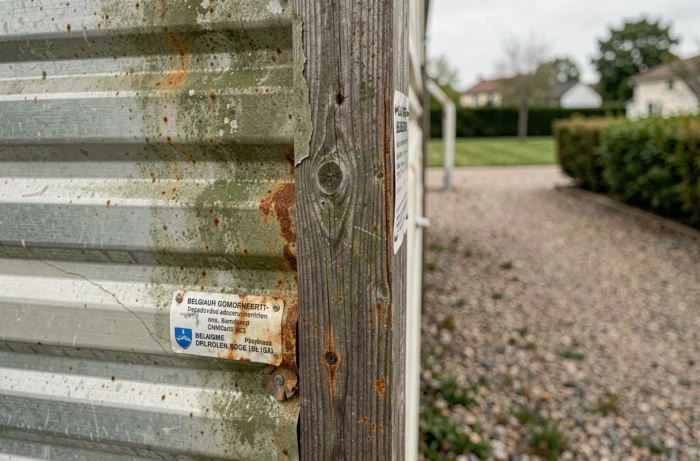
Effective residence in a Belgian campsite: rights and limits for owners
The most delicate case concerns people who live year-round in their mobile home. In Belgium, the municipality cannot refuse registration in the population register if the mobile home constitutes the actual place of residence, even in a tourist campsite. This is a federal obligation.
In practice, this protection remains fragile. The municipality registers the resident, but the Walloon Region can sanction the operator who tolerates permanent habitation in a tourist campsite. The resident then finds themselves caught in a bind: legally domiciled, but on land from which the operator risks losing their authorization.
For a mobile home over twenty years old, this situation is even more precarious. The operator has two reasons to request departure: the regional policy against permanent habitation and the presumed obsolescence of the installation. The owner often lacks the means to relocate quickly.
What to do in the face of a removal request
First, contest the legal basis invoked. If the operator relies on a contractual clause, have its validity checked by a specialized lawyer. If the request comes from the CGT for technical non-compliance, request a detailed report of the identified shortcomings. An old mobile home in good technical condition cannot be removed solely on the basis of age.
The distinction between actual obsolescence and arbitrary age limit remains the central point of any contestation. A well-maintained mobile home, compliant with safety standards and connected according to regulations can remain operational well beyond twenty years, provided that the pitch contract allows it and that the land authorization is maintained.