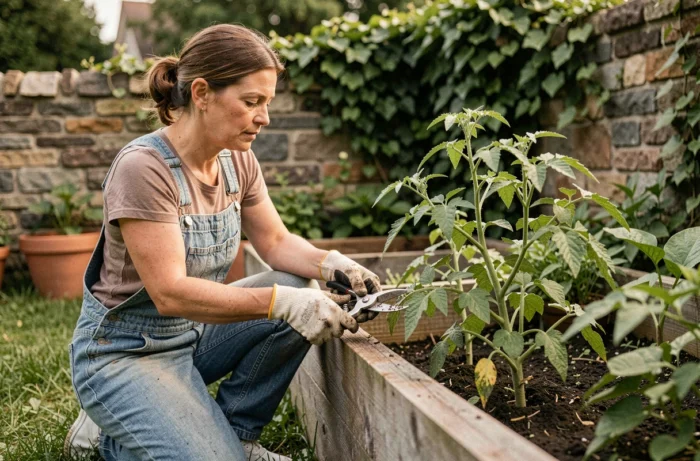
A living soil, regulations that tighten each year, more frequent drought episodes: maintaining the garden all year round is no longer just about mowing and watering by instinct. We review the technical points that truly condition the health of a garden across the four seasons.
Regulatory constraints to integrate into your garden maintenance calendar
Since January 1, 2019, synthesis pesticides are prohibited for individuals. Only biocontrol products, those with low risk or usable in organic farming remain accessible, provided that the label states “Authorized for garden use.” This restriction profoundly changes phytosanitary management in both vegetable gardens and flower beds.
The burning of green waste in the open air is also prohibited. Each pruning, each mowing generates a volume that must be processed on-site (shredding, composting) or taken to a recycling center. We recommend integrating a plant shredder into the basic equipment: the produced mulch serves directly as a cover, closing the loop.
The resources offered by Bon Jardinier allow you to cross-reference these obligations with a care program tailored to each type of plant.
Another often overlooked point: prefectural water restriction orders vary from one department to another. Even water from a rainwater collector can be affected depending on the level of drought. Before planning summer watering, check the VigiEau platform of the Ministry of Ecological Transition.
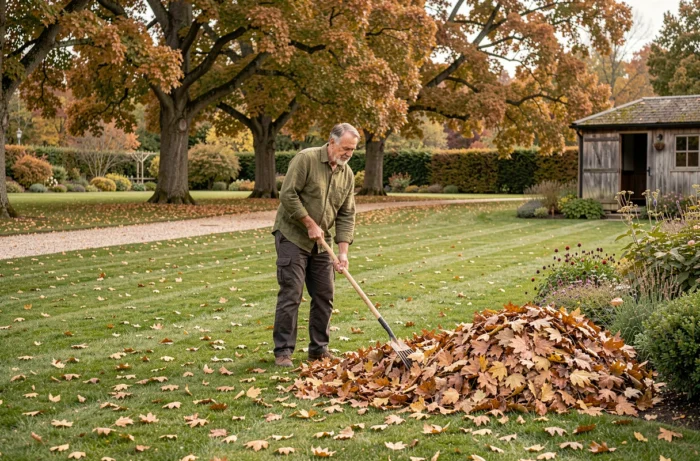
Mulching and soil life: the technique that reduces interventions by half
Mulching is not just an aesthetic gesture. When applied correctly, it drastically reduces weeding, decreases water evaporation, and nourishes the soil fauna. We observe that most mulched gardens end up in a vicious cycle: excessive watering, crust formation, weeds, mechanical intervention, soil compaction.
Choosing the right mulch according to the garden zone
A BRF (fragmented branch wood) mulch is suitable for shrub beds and hedges. In contrast, in the vegetable garden, straw, hay, or dead leaves mulch decomposes faster and feeds the soil with nitrogen without creating prolonged nitrogen hunger.
- Ornamental beds and tree bases: BRF or pine bark in a sufficient thickness to block weed germination
- Vegetable garden and cultivation beds: straw, hay, dried grass clippings, renewed with each crop rotation
- Paths and walkways: coarse mulch or wood chips, which withstand foot traffic without compacting too quickly
A permanently covered soil remains alive even in the middle of winter. This is the fundamental principle. Bare soil freezes on the surface, loses its structure, and sees its microfauna disappear.
Pruning plants and nesting calendar
Competing guides detail pruning periods by species. What they omit is the constraint related to wildlife. Pruning periods must take into account the reproduction of birds and pollinating insects. Pruning a hedge during nesting season, between March and August, destroys entire broods.
For wild hedges and spring-flowering shrubs, we recommend two intervention windows: late February (before nesting starts) and September-October (after the last broods have fledged). Summer pruning is limited to occasional interventions on troublesome branches, never complete cutting back.
Pruning fruit trees: distinguishing training pruning from fruiting pruning
Training pruning is done in winter on young subjects, outside of frost periods. Fruiting pruning, which is lighter, takes place in late winter on established trees. Confusing the two weakens the tree and compromises the harvest.
A well-sharpened and disinfected pruner between each subject limits the spread of fungal diseases. This simple gesture avoids curative treatments that, let us remember, are now very regulated for individuals.
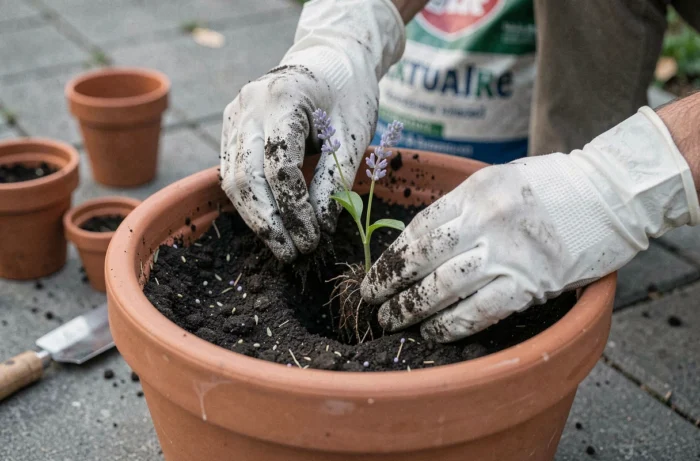
Watering the garden during restriction periods: adapting the technique to the soil
Watering in the morning or evening is not enough to optimize water consumption. The real variable is the soil’s retention capacity. A sandy soil drains in a few hours what a clay soil retains for several days.
On draining soil, short and frequent drip irrigations maintain moisture in the root zone without loss by percolation. On heavy soil, a generous but spaced watering allows water to penetrate slowly without surface runoff.
- Sandy soil: drip irrigation, thick mulch, fractional applications every two to three days in summer
- Clay soil: slow gravitational watering, minimum one-week spacing, mulching to prevent cracking
- Silty soil: the most versatile, but sensitive to compaction, so always cover after watering
Rainwater harvesting remains the most coherent solution. An underground tank coupled with a watering timer covers the majority of the needs of a medium-sized garden, even in dry summer.
Preparing the vegetable garden soil before winter
The autumn period concentrates the most costly mistakes. Leaving a bare vegetable garden all winter exposes the soil to erosion, nutrient leaching, and structure destruction by frost.
Sowing a green manure in September protects and enriches the soil until spring. Mustard, phacelia, or rye fix atmospheric nitrogen, loosen the soil through their roots, and provide biomass to incorporate before spring sowing.
The addition of mature compost on the surface, covered with mulch, completes this preparation. Deep soil work (digging) is reserved for very compacted land. On already structured soil, a simple grelinette is sufficient to aerate without turning the horizons.
A garden maintained all year round rests on three pillars: a covered and living soil, a calendar aligned with regulations and wildlife, and water management adjusted to the nature of the terrain. The most effective practices are often the least spectacular, but they are the ones that build long-term fertility.