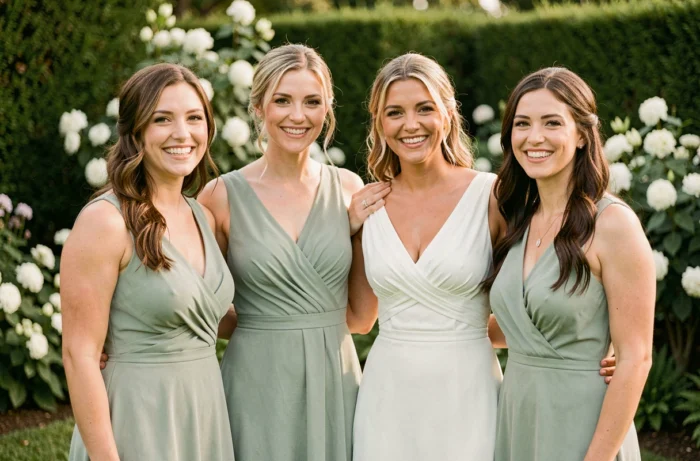
Your best friend has been married for three years, and she is the one you want by your side on the big day. The question then arises: can you entrust her with the role of maid of honor even if she is already wearing a wedding ring? No rule, whether civil or religious, prohibits this in France. The title of maid of honor has no legal value; it is an emotional choice.
Matron of honor: a title that already exists for married women
In Anglo-Saxon tradition, this question is never even raised. Two terms have coexisted for a long time: maid of honor for a single woman, matron of honor for a married woman. The responsibilities are identical in both cases, from emotional support to speaking during the reception.
In France, this distinction has never been formalized. “Demoiselle d’honneur” is used as a generic term, which creates confusion. The word “demoiselle” refers to the status of an unmarried woman in classical French, hence the frequent doubt.
In practical terms, choosing a married woman as maid of honor does not change the course of the ceremony or the tasks assigned. The only difference is lexical, and it does not commit anyone.
Married maid of honor: what really changes in the organization
On the ground, a married maid of honor often brings a concrete advantage: she knows the logistics of a wedding from the inside. She understands what the preparations entail, the stress of planning, and budgetary trade-offs. This experience facilitates coordination on the big day.
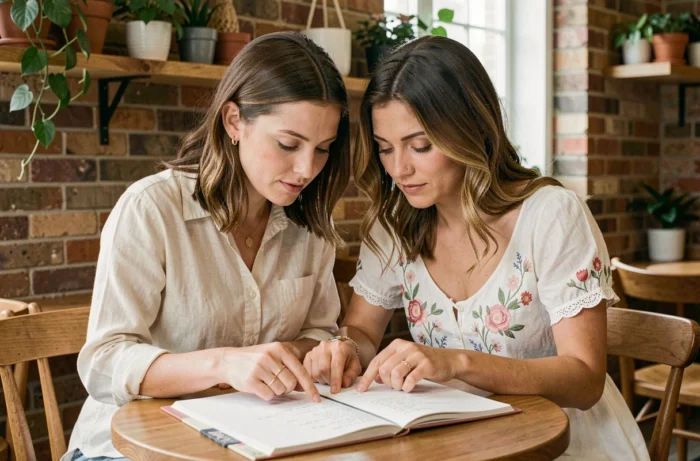
Some practical points deserve to be anticipated:
- Her partner will likely be invited to the wedding. Consider the seating plan in advance to avoid a last-minute headache if she needs to remain mobile during the ceremony and the reception.
- Her availability may differ from that of a single friend. Between couple life, possibly children, and her own schedule, clarify from the start the level of involvement expected.
- If she has young children, arrange for childcare during the times she will be occupied (dressing, procession, group photos).
These constraints are not obstacles. They just require an open conversation at the time of the proposal.
Procession and attire: adapting the dress code without awkwardness
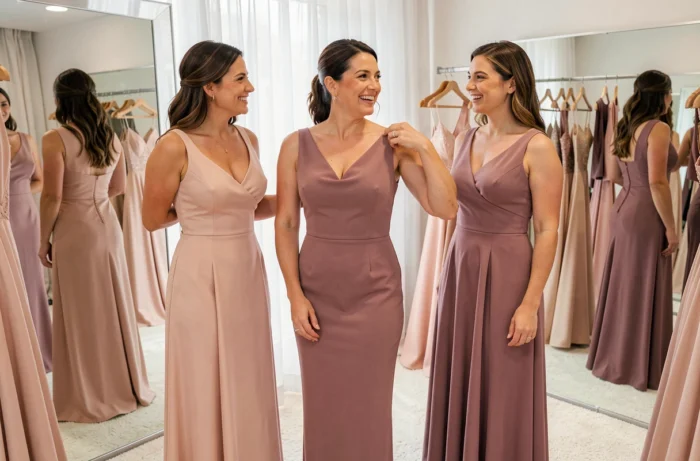
The question of the dress comes up systematically. When forming a procession of maids of honor with varied profiles (single, married, of different ages), choosing a uniform outfit can pose a problem.
Two approaches work well. The first: impose a common color but allow each person to choose the cut of her dress. This allows a married woman, perhaps a mother, to wear an outfit in which she feels comfortable. The second: opt for a common accessory (identical bouquet, shawl, jewelry) rather than a strictly identical dress.
Regarding the budget, feedback varies on this point. Some brides cover the dresses for the procession, while others ask each maid of honor to purchase her own. With a married friend, it is best to address the topic directly. She may be managing a family budget and will appreciate transparency.
Difference between witness and married maid of honor
The two roles are often confused, especially when the chosen person is a long-time close friend. The witness has a legal function: he or she signs the marriage certificate at the town hall. The maid of honor has no administrative obligation; her role is entirely ceremonial and emotional.
There is nothing to prevent combining the two. Your married friend can be both the official witness at the town hall and the maid of honor during the religious or civil ceremony. This combination is common in weddings with a small procession.
However, if you already have your two legal witnesses and simply want to assign her a visible role during the ceremony, the title of maid of honor is the right choice. Specify what you concretely expect from her: holding your train, keeping the rings, giving a speech, coordinating the vendors on the morning of the wedding.
How to propose the role without creating discomfort
The main barrier is not tradition. It is the fear of refusal or awkwardness. A married woman may hesitate to accept because she fears she does not fit the classic image of the procession, or because she thinks the role rightfully belongs to a younger single woman.
The best approach remains direct. Explain why you are choosing her specifically. The emotional bond takes precedence over marital status. Mention what the role entails in terms of time and presence so she can accept with full knowledge of the facts.
If she declines, it is not a rejection. It is often a matter of availability or already heavy mental load. You can then propose an alternative role: reading during the ceremony, giving a speech at dinner, or simply having a place of honor at the table of close friends.
The title of maid of honor has never been reserved for single women in French law. It is a role of trust, not a civil status. The only question that matters: will this person be the right ally on your wedding day?