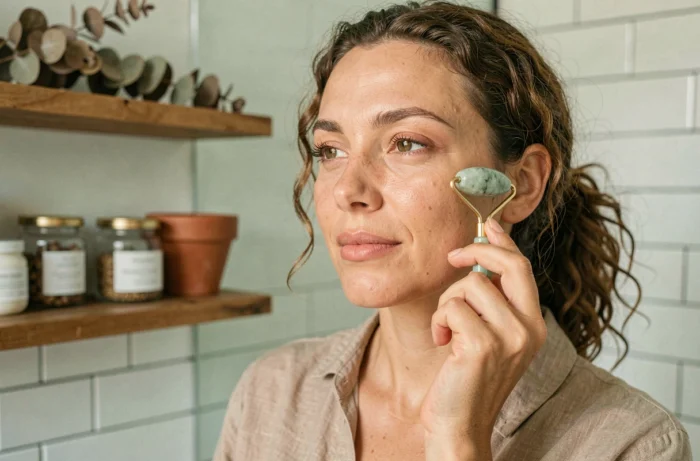
The natural aesthetic is based on a persistent misunderstanding: the idea that a plant-derived ingredient is by definition gentle, effective, and risk-free. In reality, the term “natural” does not correspond to a single legal threshold of plant content in European cosmetic regulation. Understanding this nuance changes the way one chooses skincare and directs towards results that are truly suitable for each skin type.
Botanical allergens and sensitive skin: what natural formulation really implies
Plant extracts and significant oils contain documented fragrance allergens: limonene, linalool, geraniol, eugenol. These molecules must be declared on labeling beyond certain thresholds, but their presence often goes unnoticed in products marketed as “gentle” or “respectful.”
The oxidation products of limonene and linalool are recognized skin sensitizers. On reactive skin or skin weakened by a recent peel, applying a serum rich in significant oils can provoke inflammatory reactions. We regularly observe in the treatment room irritations linked to poorly calibrated “natural” routines.
The concentration and route of exposure determine the risk far more than the origin of the active ingredient. A product formulated with a low dosage of lavender oil in an appropriate emollient base does not pose the same problem as a concentrated serum applied to exfoliated skin. Professionals working with personalized protocols, like those offered on institut-bote.fr, incorporate this dosage logic into each treatment.
Environmental claims in cosmetics: the EmpCo directive changes the game
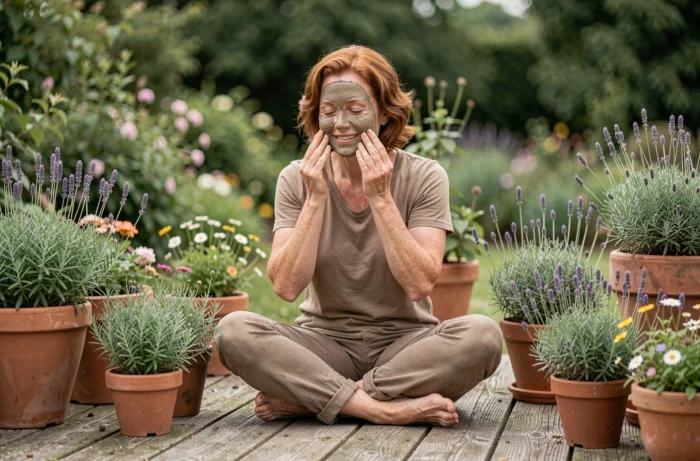
The formulations “eco-friendly,” “green,” or “environmentally friendly” will be regulated much more strictly. The EmpCo directive specifically targets these generic claims when they are not based on recognized and demonstrated environmental performance.
Carbon offsetting can no longer justify a climate neutrality claim. In practical terms, a product can no longer be presented as having a neutral, reduced, or positive climate impact if this conclusion is based solely on offsetting emissions. Private labels lacking credible certification will also be scrutinized.
For brands positioned in the natural aesthetic space, this means a fundamental effort on the traceability of raw materials and transparency of processes. Informed consumers will demand more than just green pictograms on packaging.
Securing cosmetic raw materials and impact on salon treatments
Climate change directly affects the availability and quality of botanical ingredients used in cosmetics. Aesthetic professionals relying on plant actives must integrate this variable into their treatment offerings.
- The variability of harvests alters the chemical composition of extracts from season to season, which can affect the efficacy or tolerance of a treatment formulated with the same ingredient
- The supply chains for significant oils are facing increasing pressures, prompting some laboratories to reformulate their flagship products with biomimetic synthetic substitutes
- Institutes that communicate about the naturalness of their protocols must ensure that their suppliers maintain the consistency of actives, or risk inconsistent results from one session to another
We recommend prioritizing brands that publish the certificates of analysis for their batches and specify the geographical origin of their key ingredients. An effective natural treatment requires a stable and transparent supply chain.
Personalization of natural treatments: skin diagnosis and tailored protocol

Personalization remains the most decisive lever for achieving visible results with natural aesthetic treatments. A skin diagnosis performed in the institute allows for the identification of the phototype, hydration level, hydrolipidic film density, and reactivity to plant actives.
Applying the same “natural” protocol to all skin types amounts to ignoring the fundamentals of cosmetology. Oily dehydrated skin does not tolerate the same vegetable oils as mature skin losing firmness. The choice of excipient, application method, and frequency conditions tolerance as much as the active ingredient itself.
Advanced diagnostic technologies (hydration analyzers, high-resolution skin imaging) now allow for quantifying the skin’s state before and after a treatment protocol. This measurable approach distinguishes a professional approach from a simple home routine.
- The initial diagnosis guides the choice between a treatment based on significant fatty acids (atopic skin) and a treatment concentrated in polyphenols (skin exposed to oxidative stress)
- In-salon follow-up allows for adjusting the concentrations of actives based on skin response, reducing the risk of progressive sensitization
- The combination of non-invasive technologies (LED, microcurrents) with targeted botanical actives offers complementary results that neither would produce alone
Real effectiveness of natural treatments: distinguishing marketing promise from skin result
The mention “natural” on a packaging does not imply either the efficacy or safety of a product. Only the complete formulation, with its concentrations and its galenic vehicle, determines the result. A chamomile extract at the right concentration in an appropriate emulsion effectively soothes inflamed skin. The same under-dosed extract in an unsuitable aqueous base produces nothing measurable.
The results of a natural aesthetic treatment also depend on the regularity of the protocol and the consistency between in-salon treatments and the home routine. We observe that clients who achieve the best results are those whose program combines spaced professional sessions with maintenance products formulated in the same galenic logic.
The natural aesthetic has its place in a reasoned approach to beauty, provided it moves beyond marketing to focus on formulation. Choosing an institute that masters plant cosmetology, adjusts its protocols based on a diagnosis, and selects its suppliers based on traceability criteria remains the best guarantee of sustainable results without compromising skin health.