The autumn-winter 2026/27 season redefines several dress codes, driven by a regulatory context that significantly alters the available offer in France. Since September 1, 2026, a legislative framework targets ultra-fast fashion, meaning brands characterized by very frequent reference renewals and low reparability.
This season’s fashion trends are therefore also viewed through this lens: more durable pieces, rethought materials, and silhouettes that focus on longevity rather than rapid replacement.
Ultra-fast fashion regulation: what changes for consumers
Discussing trends without mentioning the legal framework that shapes them would be incomplete. The French anti-fast fashion law, which came into effect on September 1, 2026, imposes a financial penalty on products from ultra-fast fashion. This additional cost directly affects the final price on the shelf.
Starting January 1, 2027, advertising and promotion of these products, including by influencers, will be prohibited. In practical terms, trends promoted by content creators must be dissociated from intensive production models. This distinction encourages buyers to turn towards pieces whose life cycle extends beyond a single season.
At the European level, the regulation on the eco-design of durable products has prohibited since July 19, 2026, large companies from destroying certain unsold clothing, accessories, and shoes. This mechanism promotes destocking, second-hand circuits, and, by extension, collections designed from the outset to last. Several brands analyzed on the fashion page on EpicBuzz are already integrating these constraints into their new autumn-winter lines.
Autumn-winter 2026 palette: brown, ecru, and bold shades
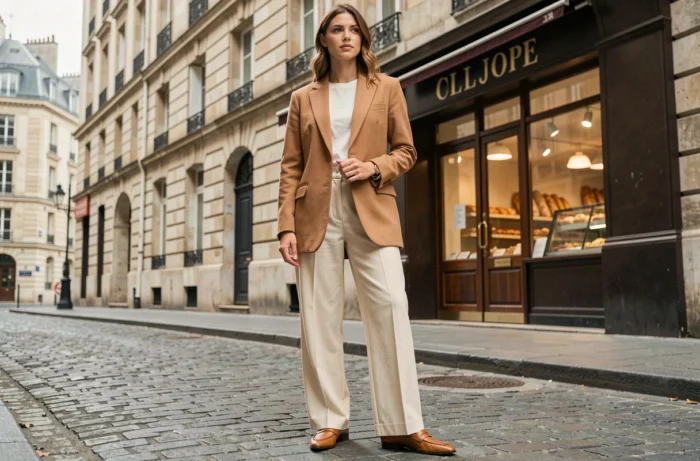
The season’s palette is organized around three axes. Brown emerges as a direct alternative to black, ranging from intense chocolate to cappuccino and mocha shades. Long confined to accessories, it now invades coats, trousers, and complete outfits.
Ecru, or off-white, confirms its status as a key shade for 2026. Associated with natural materials (wool, thick linen, cashmere), it brings an impression of discreet luxury without overwhelming the silhouette. It is a color that works particularly well in layering, a central principle this season.
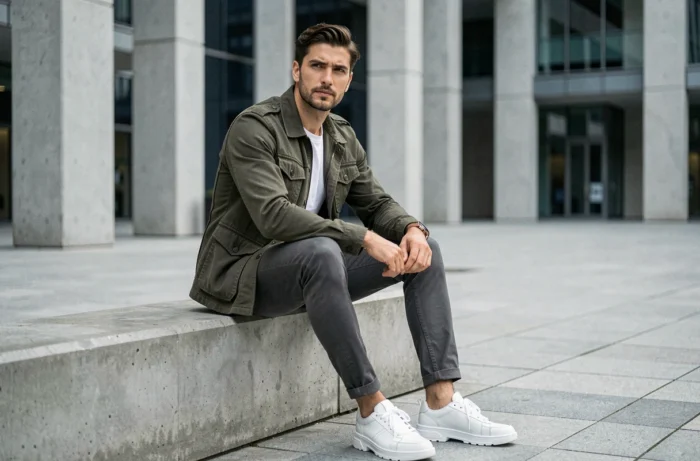
Alongside these warm neutrals, bolder shades punctuate the looks: deep burgundy, petrol blue, and fir green. The idea is not to accumulate bright colors but to use a single one as a focal point against a neutral background.
Patterns to note for the season
Timeless patterns dominate: British-inspired checks, fine stripes, and subtle prints. Structured tailoring borrows from menswear, featuring fitted jackets and pleated trousers that create a autumn-winter style at the intersection of formal and everyday.
Key pieces and silhouettes for the autumn-winter season
Several categories of clothing concentrate the major evolutions this season. Here are the pieces that deserve special attention:
- The tailored jacket, cut slightly longer than in previous seasons, with structured but not exaggerated shoulders. It replaces the short blazer that dominated spring-summer.
- The wide pleated trousers, worn high-waisted, in wool or flannel. They work well with both ankle boots and chunky loafers.
- Thick, textured knitwear: cable-knit sweaters, oversized vests, long cardigans. Heavier materials reflect the search for durability encouraged by the new regulatory framework.
- The pleated or straight midi skirt, in heavy fabric, which fits into the characteristic layering games of this autumn-winter.
The principle of textured layering is the guiding thread of the season. A fine turtleneck under a structured jacket, a long vest over a shirt, a flowing dress under a short coat: each visible layer adds dimension to the look without weighing down the silhouette.

The barrel jean, a transition between two seasons
Emerging in spring-summer 2026, the barrel jean (loose fit at the hips, tapered at the ankle) continues its progression. In raw or dark denim, it adapts to the autumn wardrobe and is worn rolled above chunky-sole ankle boots. Its cut flatters most body shapes, which explains its longevity in trends.
Consuming fashion differently: sustainability and seasonal choices
The European ban on the destruction of unsold textiles pushes brands to produce more adjusted volumes and offer pieces designed to last through multiple seasons. For consumers, this translates into a change in approach at the time of purchase.
Rather than accumulating ephemeral pieces, investing in three or four quality garments per season covers most needs. A tailored wool jacket, a pair of pleated trousers, a thick knit sweater, and a well-constructed pair of ankle boots form a sufficient foundation.
Second-hand circuits also benefit from this dynamic. The European eco-design regulation explicitly encourages reuse, and vintage autumn-winter pieces (wool coats, cashmere sweaters, leather jackets) are gaining popularity. The style of this season, centered on classic cuts and noble materials, lends itself particularly well to second-hand purchases.
The autumn-winter 2026/27 season marks a concrete turning point in how fashion trends are constructed. The French and European legislative framework does not dictate colors or cuts, but it reduces the visibility of disposable collections and steers the offer towards pieces designed to last. Brown, ecru, structured tailoring, and textured layering are not passing fashion effects: they are choices that work well beyond a single season.