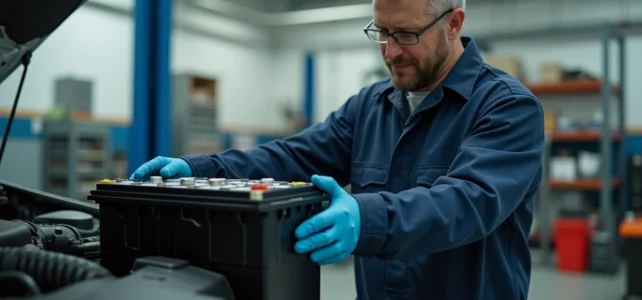
The battery of a hybrid car draws attention as soon as one considers a purchase, whether new or used. Between manufacturers’ promises and real-world performance, the gap deserves to be measured. How long does a hybrid battery actually last, and especially, what factors accelerate or slow down its degradation?
Classic hybrid or plug-in hybrid: different aging constraints
Content on the subject often treats “the hybrid battery” as a homogeneous block. The technical reality requires a clear distinction between classic hybrid (HEV) and plug-in hybrid (PHEV), because the charge and discharge cycles are not the same.
| Criterion | Classic Hybrid (HEV) | Plug-in Hybrid (PHEV) |
|---|---|---|
| Common Technology | NiMH or lithium-ion | Lithium-ion |
| External Charging | No (regeneration during braking) | Yes (home outlet or charging station) |
| Typical Depth of Discharge | Low (narrow charging window) | Wider (all-electric mode) |
| Number of Full Cycles | Few deep cycles | More frequent deep cycles |
| Sensitivity to Charging Habits | Low | High |
On an HEV, the electronic management system keeps the battery within a restricted charge range, which mechanically limits cell wear. The battery almost never drops below a certain threshold and never reaches full charge.
On a PHEV, the user charges via an external outlet and drives in pure electric mode. Each all-electric trip stresses the battery over a much wider range. Plug-in hybrids undergo more deep cycles than classic hybrids, which accelerates capacity loss over the long term.
The lifespan of hybrid car batteries therefore depends on the exact type of vehicle, and not just the mileage displayed on the odometer.
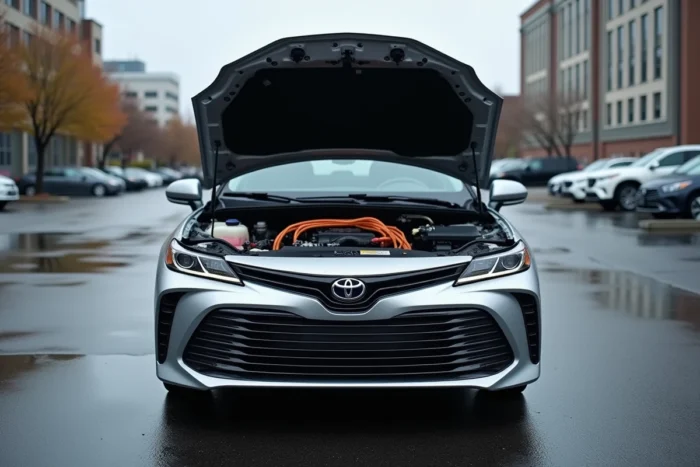
SoH Diagnosis: the data that changes the purchase of a used hybrid
Mileage and year of first registration are not enough to assess the actual condition of a hybrid battery. A car parked for several months in a hot climate may have a more degraded battery than a vehicle that has been regularly driven in a temperate zone.
The State of Health (SoH) expresses as a percentage the residual capacity of the battery compared to its initial capacity. An SoH of 85% means that the battery retains 85% of its original energy.
What SoH reveals before purchase
A SoH diagnosis performed by a dedicated tool (at a specialist or via a suitable OBD device) provides three pieces of information that neither the maintenance history nor the logbook can provide:
- The actual remaining capacity, compared to factory specifications, which allows one to know if the announced electric range still corresponds to reality
- The balance between modules: a marked imbalance between cells indicates irregular aging, often a precursor to localized failure
- The minimum and maximum voltage of each module, which helps to identify weak cells before they cause a complete failure
An SoH below 70% generally makes replacement inevitable. Between 70% and 80%, the battery still functions, but the electric range and energy recovery performance noticeably decline in everyday use.
Complete pack replacement or module-by-module repair
Faced with a degraded battery, two options are available. Complete pack replacement is the default solution offered at dealerships. It guarantees a total upgrade, but its cost remains the main barrier.
Partial replacement, module by module, is significantly cheaper when the failure is localized. If the SoH diagnosis shows that only two or three modules out of ten display abnormal voltage, replacing just those elements restores the battery to functional condition without bearing the cost of a new pack.
The limits of partial replacement
This approach has one condition: the new or refurbished modules must be compatible in voltage and capacity with the remaining modules. If the SoH gap between the old and new modules is too large, the management system (BMS) will struggle to balance the whole. The result would be accelerated degradation of the new modules, dragged down by the old ones.
In practice, partial replacement works well when the overall SoH remains above 75-80% and the failure concerns a limited number of cells. Below that, complete replacement becomes more relevant from both a technical and economic standpoint.
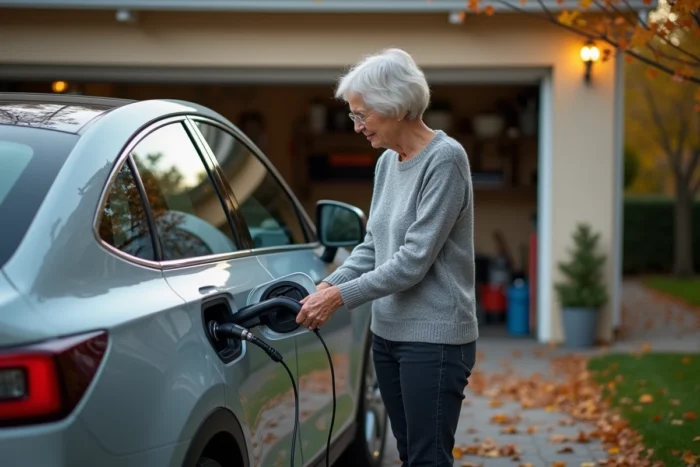
Concrete factors that accelerate the degradation of a hybrid battery
Three parameters dominate aging, and their respective weight varies according to the type of hybrid.
Temperature is the most documented degradation factor. Lithium-ion and NiMH batteries lose capacity faster when exposed to prolonged heat. A vehicle regularly parked in full sun in southern France ages its battery faster than a vehicle parked in a basement.
The number and depth of charge cycles weigh more on PHEVs than on HEVs, as illustrated in the table above. Systematically charging to 100% and driving until the electric battery is empty imposes greater chemical stress than maintaining usage between 20% and 80%.
Calendar time acts independently of mileage. A hybrid battery that remains unused for several months undergoes slow self-discharge and passive chemical aging. Little-used vehicles are not spared.
Manufacturer warranty and actual lifespan
Most manufacturers guarantee the hybrid battery for a given duration or mileage, whichever comes first. This warranty generally covers a minimal capacity threshold (often around 70% of SoH).
The actual lifespan often exceeds the warranty period when usage conditions are favorable. Classic hybrids reach very high mileages with their original battery, precisely because the BMS limits the stress on the cells.
For a used purchase, the most reliable reflex remains to request a SoH diagnosis before signing. This test objectively assesses the condition of the battery better than any promise regarding theoretical longevity, and it guides the decision between partial replacement, complete replacement, or simply continuing to use it.