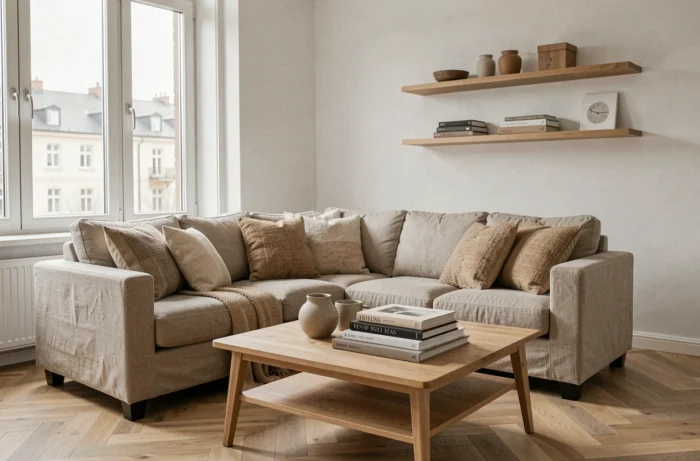
Decorating an interior is primarily about deciding what stays and what goes. Before any purchase, observing the existing space, its volumes, natural light, and circulation determines the choices of furniture, colors, and layout. The decisions made at this stage affect the coherence of the whole over time.
Reuse of furniture: a structured decoration lever in France
Decorating with second-hand furniture is no longer seen as opportunistic DIY. The reuse sector has become institutionalized, supported by Ecomaison and local authorities that organize dedicated drop-off points, reuse spaces, and specific collections for used furniture.
According to Xerfi, one in four pieces of furniture sold in France is now second-hand. This sustainable shift changes the way a decoration project is approached: hunting for a walnut sideboard or a solid oak table has become a common practice, not an exception.
Reuse offers an often underestimated advantage for the coherence of an interior. An antique piece brings a patina and uniqueness that a standardized new piece does not replicate. To delve deeper into this approach applied to the home, several resources are available on the site lesarchivistes.net that explore these topics in detail.
Colors and natural light: adapting the palette to the room
Choosing a wall color without considering the room’s orientation is the most common mistake in decoration. A shade that seems soft under store lighting can turn dull in a north-facing room or saturate a space bathed in full southern sunlight.
The role of light in color perception
Natural light radically alters the perception of a color depending on the time of day and orientation. A gray-blue on a west wall will capture the warm tones of the evening and appear softer at the end of the day, while it will seem cold in the morning. Testing a sample directly on the relevant wall, observing it at different times, avoids disappointments after application.
The drenching technique to unify a space
Drenching involves applying the same shade to the walls, woodwork, and ceiling of a room. This approach, validated by professional decorators, eliminates visual breaks and creates a sense of continuous volume, particularly effective in small rooms or narrow hallways.
The effect works well with both neutral tones and bold colors. A terracotta applied in drenching in a bedroom creates a sensory envelope that white walls with a single colored panel cannot achieve.
Furnishing a small space: choices that change circulation
In a small space, decoration is not about accumulating visual tricks but about concrete furniture choices. Each piece occupies a significant percentage of the floor area, making sizing errors immediately visible.
- Choosing a compact two-seater sofa instead of an oversized corner model frees up a circulation path that changes the daily use of the room
- Replacing a fixed coffee table with a nesting model allows for modulating the available surface according to the times of day
- Opting for vertical storage (high wall shelves, column bookcases) clears the floor and draws the eye upward, amplifying the sense of height
Modular furniture transforms a 15 m² living room into a multifunctional space. An extendable console serves as a desk during the day and a table for four in the evening. This type of choice avoids cluttering the room with single-use furniture.
Sustainable materials and decoration: what sensoriality changes
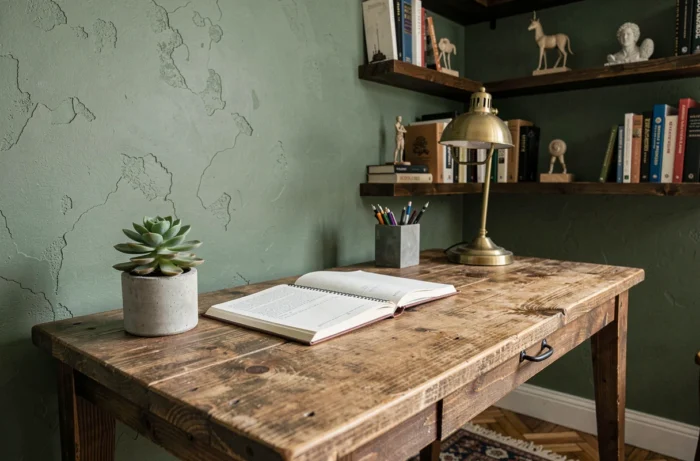
Contemporary furniture affirms a shift towards sensoriality and sustainability. Solid wood, ceramics, linen, full-grain leather, natural stone: these materials age by developing a patina, whereas a melamine particle board piece degrades in a few years without the possibility of restoration.
A piece of furniture made from noble materials can be repaired and passed down, making it a long-term decorative investment. A marked solid oak table can be sanded and re-oiled. A turned wood chair can be re-caned. A full-grain leather sofa is nourished and gains character over time.
Integrating recovered materials from the construction phase
Reuse is no longer limited to finished furniture. Methodological sheets published in 2026 by La Poste Immobilier, Icade, and Sequndo (with the support of Valobat) aim to standardize the reuse of secondary materials in renovation. This means it is now possible to integrate recovered elements (old parquet, cement tiles, metalwork) directly during construction, not just at the end of the project.
This approach requires prior planning. Identifying available materials before finalizing layout plans allows for adapting the project to what exists, rather than defaulting to seeking new materials.
Wall art and objects: balancing accumulation without overloading
A wall filled with disparate frames rarely produces the desired gallery effect. The wall composition is based on a simple principle: grouping frames around a central axis or a common baseline.
Arranging everything on the floor before drilling avoids unnecessary holes and allows for testing several configurations. Three to five pieces of varying sizes but connected by a common tone (black and white, natural wood, warm tones) are enough to dress a wall without overwhelming it.
- Leave at least five centimeters between each frame to allow the eye to move without saturation
- Align the center of the composition at eye level (about 1.50 m from the floor) for natural visual comfort
- Mix a large format with two or three small formats rather than aligning identical frames, which creates rhythm without monotony
Objects placed on surfaces (shelves, consoles, side tables) follow the same logic of restraint. Three objects of different heights grouped together are better than ten scattered knick-knacks. This trio composition rule, used in scenography, creates a focal point without giving the impression of a cluttered interior.
The decoration of an interior gains coherence when each choice, from furniture to colors to materials, stems from an initial observation of the space. Reuse and sustainable materials add an additional dimension: that of an interior that evolves over time instead of going out of style in just a few seasons.