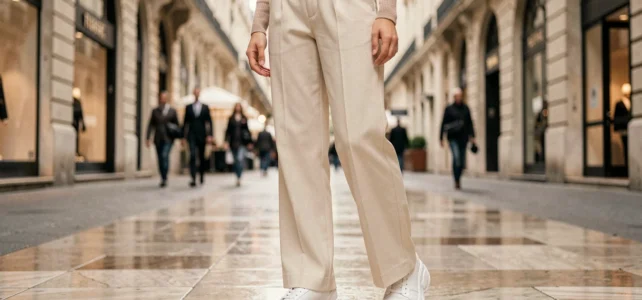
The Serafini wedge sneakers occupy a specific segment of the women’s sneaker market: where Italian leather craftsmanship meets an elevated sole designed for urban daily life. Between low-cost copies and designer models positioned well above, where does the Serafini women’s offering actually stand? This article compares the ranges, analyzes the construction of flagship models, and examines what differentiates premium leather from mass-produced leather.
Women’s wedge sneakers: Serafini’s positioning in the market
The concept of integrated wedge heel sneakers (hidden wedge) has become widely democratized. Fast fashion brands now offer thick-soled models with hidden elevation, positioned as casual winter shoes, at very accessible prices. This shift towards mass-market changes the perception of the segment.
| Criterion | Serafini (luxury segment) | Fast fashion (like Shein) |
|---|---|---|
| Main material | Full-grain leather, python or suede finishes | Synthetic PU or canvas |
| Manufacturing | Italy, artisanal assembly | Asia, industrial production |
| Wedge sole | Integrated into the structure, ergonomic support | Glued, standard foam |
| Color range | White, beige, pink, seasonal touches | Wide palette, rapid turnover |
| EU leather compliance | Tanneries subject to REACH standards | Variable, rarely documented |
This table highlights a gap in construction rather than style. The wedge silhouette is found everywhere, but the quality of the leather and the place of manufacture remain the true differentiators.
The Serafini wedge sneakers for women stand out due to an assembly that combines leather upper and structured sole within the same workshop, whereas most mass-market brands outsource each component separately.
Serafini leather and REACH compliance: what the raw material conceals
The leather used in premium sneakers sold on the European market is subject to regulatory oversight that product sheets rarely mention. Importers must test each product line for REACH compliance before shipping, with accredited laboratory reports required as customs documents.
Meanwhile, more and more retailers in Europe (notably in the UK, Germany, the Netherlands, and Scandinavia) are imposing the use of Leather Working Group (LWG) certified tanneries as a business condition. For a brand like Serafini, whose production remains in Italy, this requirement is integrated into the local supply chain.
Why recycled synthetic leather does not replace full-grain leather
Recycled PU (polyurethane from industrial scraps) is gaining ground in accessible ranges. Its initial softness mimics leather well, but its durability in flexing remains inferior. On a wedge sneaker worn daily, the creases from walking mark the recycled PU within a few months, while full-grain leather develops a patina without cracking.
This difference in aging explains why Serafini models (Cannes, Copenaghen Vintage, Court) retain their shape after several seasons. Italian leather tanned to LWG standards ages better than synthetic leather, even recycled.
Serafini women’s models: analysis of key silhouettes
The Serafini women’s collection is structured around several lines with distinct characteristics. Three of them focus on the wedge offering:
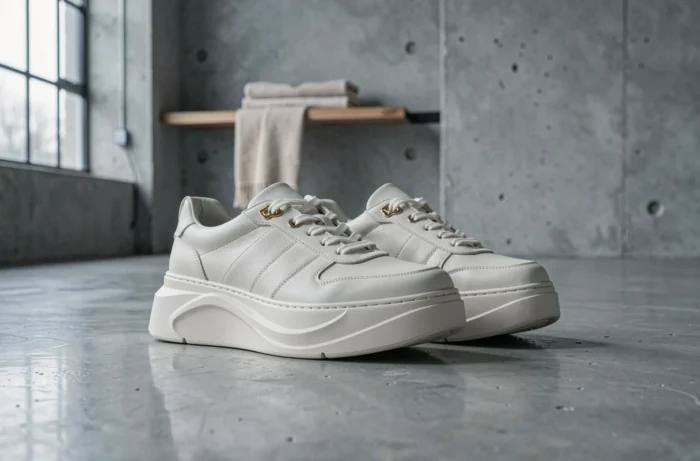
- Cannes: low silhouette in white leather, thick but not massive sole, designed for summer outfits. It is the model closest to a classic tennis shoe elevated.
- Copenaghen Vintage: a retro-inspired design with suede inserts and warmer colors (beige, sand pink). The sole includes a slight wedge that elongates the silhouette without a platform effect.
- Malibu: a sportier profile, with brighter color accents and a sculpted sole. This model is aimed at those seeking a marked contrast between streetwear and refined leather.
Other lines like Torino, Kensington, or San Diego Low offer low-top variations without marked elevation, more oriented towards a flat casual style.

The detail of the python finish
Several Serafini models incorporate panels with embossed python finish on leather. This textured treatment, achieved by hot pressing on the leather, provides a visual relief without resorting to exotic skin. The result adds character to a classic white sneaker while remaining compatible with the ethical expectations of the European market.
Serafini wedge sneakers and women’s sneaker trends: convergence or niche
The women’s sneaker market tends towards two poles: ultra-minimalist models (like sporty ballerinas, such as recent collaborations between major brands and the dance world) and pronounced platforms. Serafini occupies a middle ground that does not follow either of these extremes.
The hidden wedge remains the brand’s central choice. The elevation is not visible at first glance, unlike thick platforms of several centimeters. This design choice targets women who want to gain height without displaying a massive sole.
The dominant colors of the collection (white, beige, pink) align with the trends identified for the spring-summer seasons, where white leather sneakers remain a staple of the women’s wardrobe. Textured finishes (python, two-tone suede) provide a uniqueness that major sportswear brands do not offer in their women’s lines.
Ultimately, Serafini’s positioning rests on a simple promise: a product made in Italy, in genuine leather compliant with European standards, with an integrated wedge sole that does not sacrifice comfort or discretion. In a market where wedge sneakers have become a staple of women’s streetwear, the difference lies in the material, finish, and traceability of the manufacturing.